Sukayu Onsen Day 1 Part 2: A Room Tour at a Historic Mountain Onsen
This time, I’ll introduce the room where I stayed at Sukayu Onsen.
In this article, I’ll cover:
・what you can expect to find in a guest room at Sukayu Onsen
・important things to know before staying
I stayed in Room 707 in Building No. 7.
The room was located deep inside the building, somewhere on the second floor… or perhaps the third floor.
Why can’t I say for sure?
Because the layout of Sukayu Onsen is bafflingly complicated. I honestly do not have enough confidence to simply declare, “It’s on the second floor.”
Even walking to the room felt like exploring an old building. I was as excited as the protagonist of an RPG.
If you have a poor sense of direction, you could absolutely get lost here. Seriously.
If you haven’t read Part 1 yet, I wrote about the shuttle bus ride to Sukayu Onsen, arriving at the inn, having lunch at Onimen-an, and taking my first bath.
Read it here:Sukayu Onsen Day 1 – Access Guide, Snow, and Women’s Bath
The Room
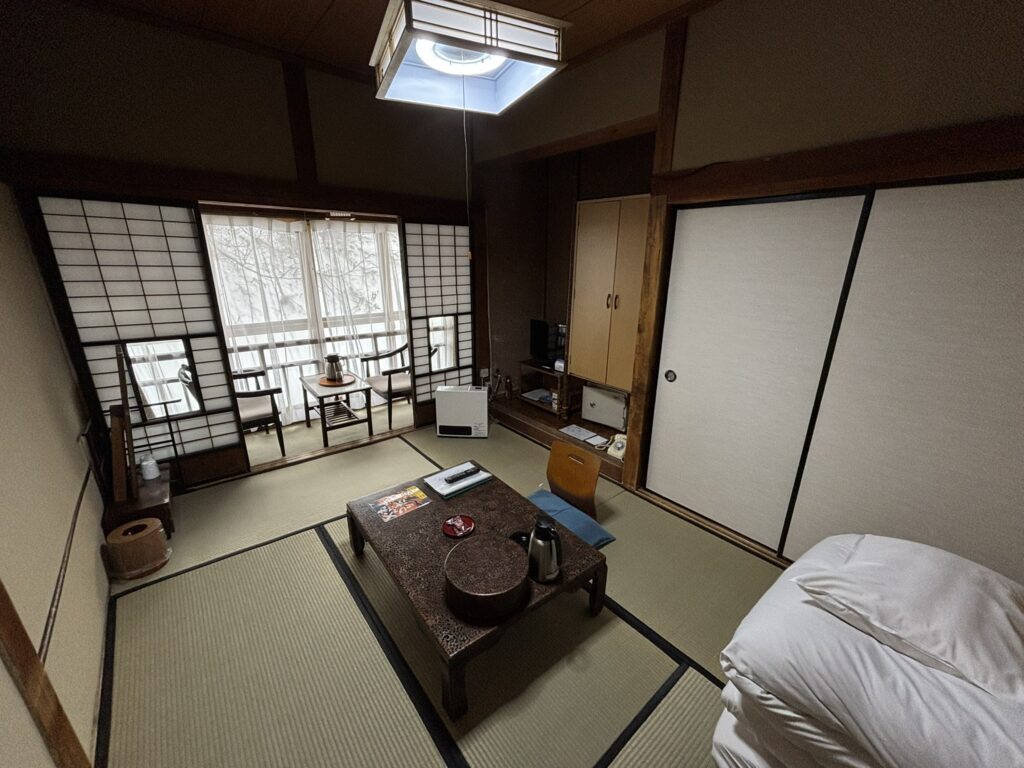
First, let’s take a look inside the room.
Yes. This. This is it!
This nostalgic Japanese-style room was exactly what I had wanted. It felt like a room from the good old days.
The room was six tatami mats in size, or approximately 10 square meters.
The ceiling light was the old-fashioned type that you turned off by pulling a cord.
When I was a child, turning off the light with a remote while tucked comfortably inside my futon was not an option. I had to stumble over to the light while half asleep and pull the cord.
Remembering that old inconvenience made me feel strangely nostalgic.
The room had a slightly dim atmosphere.
Instead of being brightly lit by modern lighting, it felt as though the natural light from the window gently illuminated the room.
Of course, polished modern hotels are wonderful.
But staying in an old-fashioned room like this has its own special charm.
It made me realize that I had stepped a little farther away from modern civilization and arrived somewhere closer to nature, deep in the mountains.
The futon placed near the front-right side of the room could be laid out whenever I wanted.
At many traditional ryokan inns, the staff enter your room while you are having dinner and prepare the futon for you.
That service was not included with the room I stayed in at Sukayu Onsen.
But honestly? I liked that too.
After taking a bath and becoming pleasantly tired, I could lay out the futon myself, lie down, scroll through my phone, or read a book.
And when I got bored, I could take a nap.
If you spent your time like this at home, someone might accuse you of being lazy.
But the whole point of an onsen trip is to rest your body, which means you are fully entitled to do absolutely nothing!!
This is one of the greatest luxuries of staying at an onsen inn.
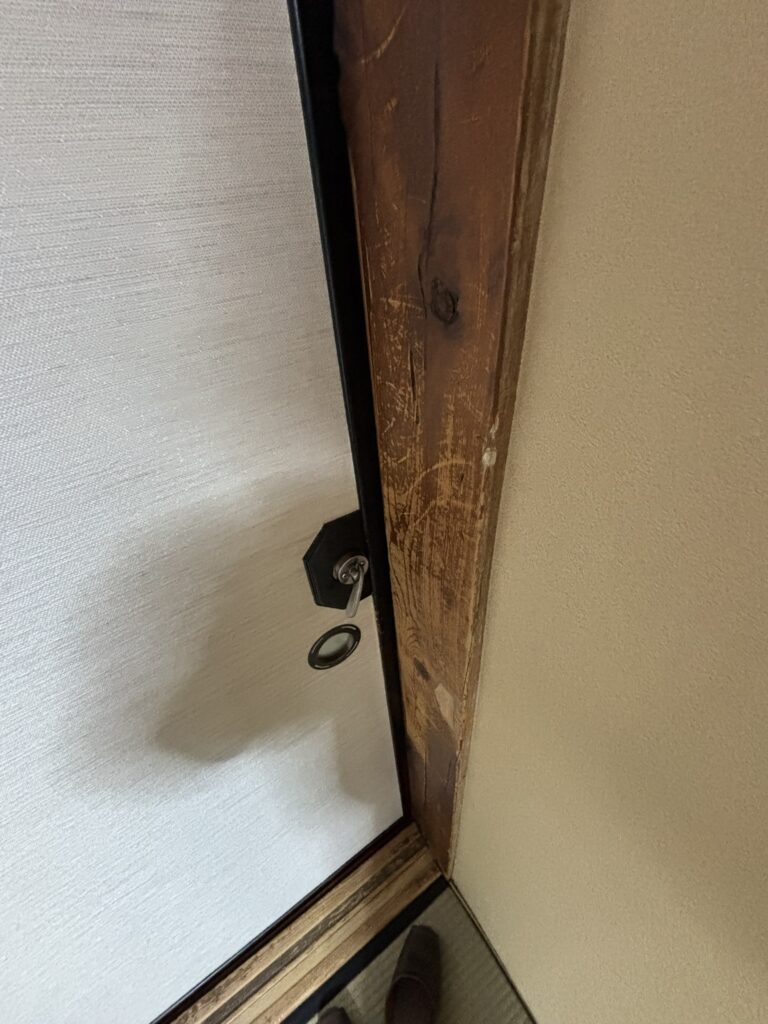
As you can see in the photo, the room key was extremely simple.
The Hiroen Space by the Window
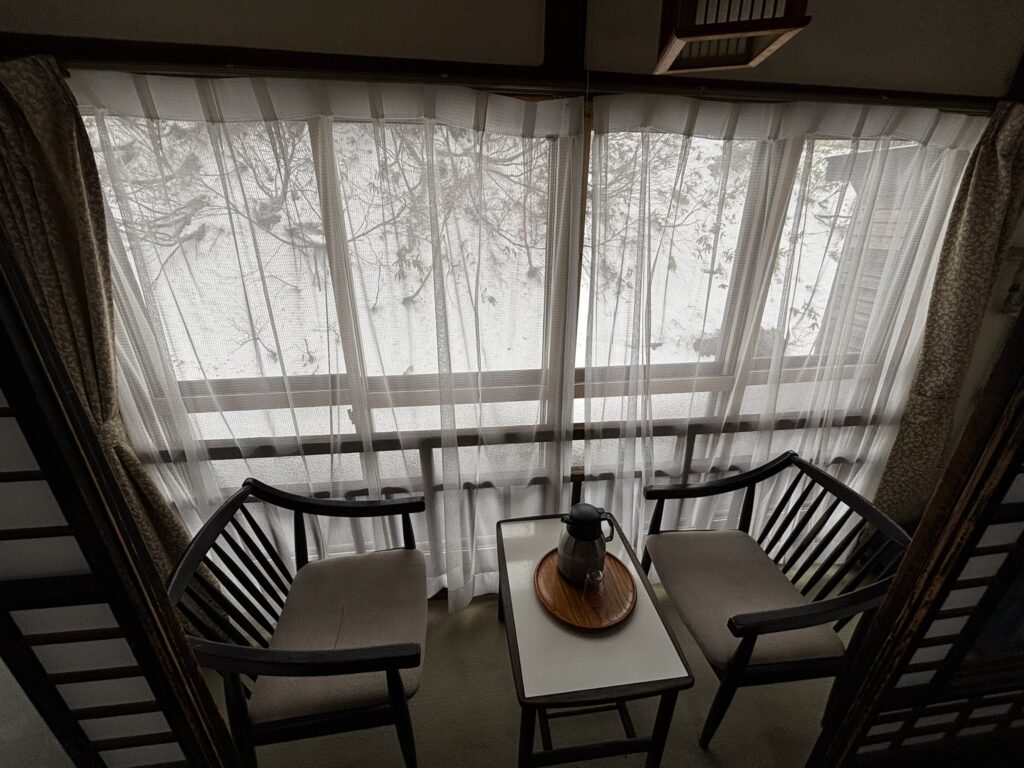
Next is the space beside the window.
This area is called a hiroen (広縁) in Japanese.
To be honest, I did not know this term myself until I started writing this article.
So don’t worry. You absolutely do not need to memorize it. Haha.
It is basically a small seating area beside a tatami room.
Since it was the only part of the room with chairs, it was a nice place to sit facing each other and relax.
I visited Sukayu Onsen in late November, but a little snow had already accumulated outside.
That’s Sukayu for you.
The Sukayu area is known as one of the snowiest inhabited places in the world.
A slight draft came in through the window, but if the room became cold, I could adjust the temperature using the kerosene heater.
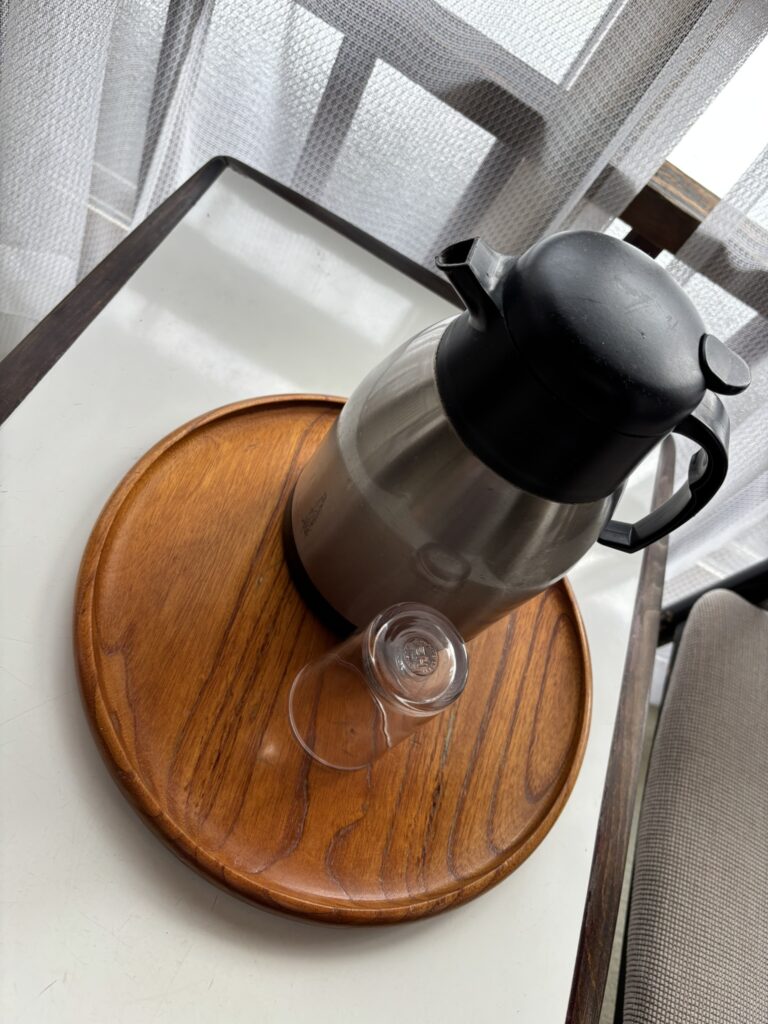
There was also a pot of water in the hiroen.
I think it may have been the same Hakkōda water that I mentioned in Day 1.
The water was served at room temperature.
Perhaps this was intentional, so that it would be gentler on the body after bathing.
Personally, I prefer chilled water. However, after getting out of the hot spring, the water tasted incredibly good—as though it were soaking straight into my dehydrated body.
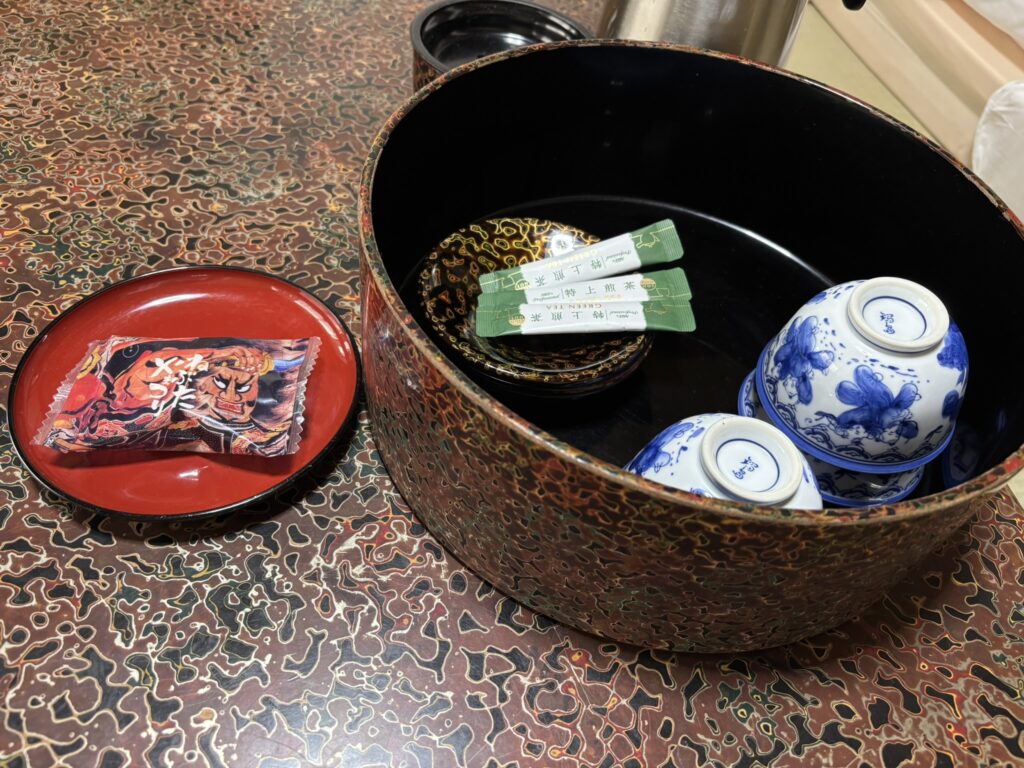
There were three packets of premium sencha green tea and a sweet called Nebuta no Himatsuri.
The sweet featured a Nebuta design. It was sweet and paired extremely well with the tea.
It was also available in the souvenir shop.
By the way, both the well-worn table and the box holding the tea and sweets were made using Tsugaru-nuri, a traditional lacquerware craft from Aomori.
“I bet these cost a fortune…” I could not help thinking.
When they were new, the table and box must have gleamed with a rich, glossy shine.
Even small details like these carried the weight of history.
Room Amenities
Yukata
There were M and L size yukata in the room.
Other sizes were available in the hallway.
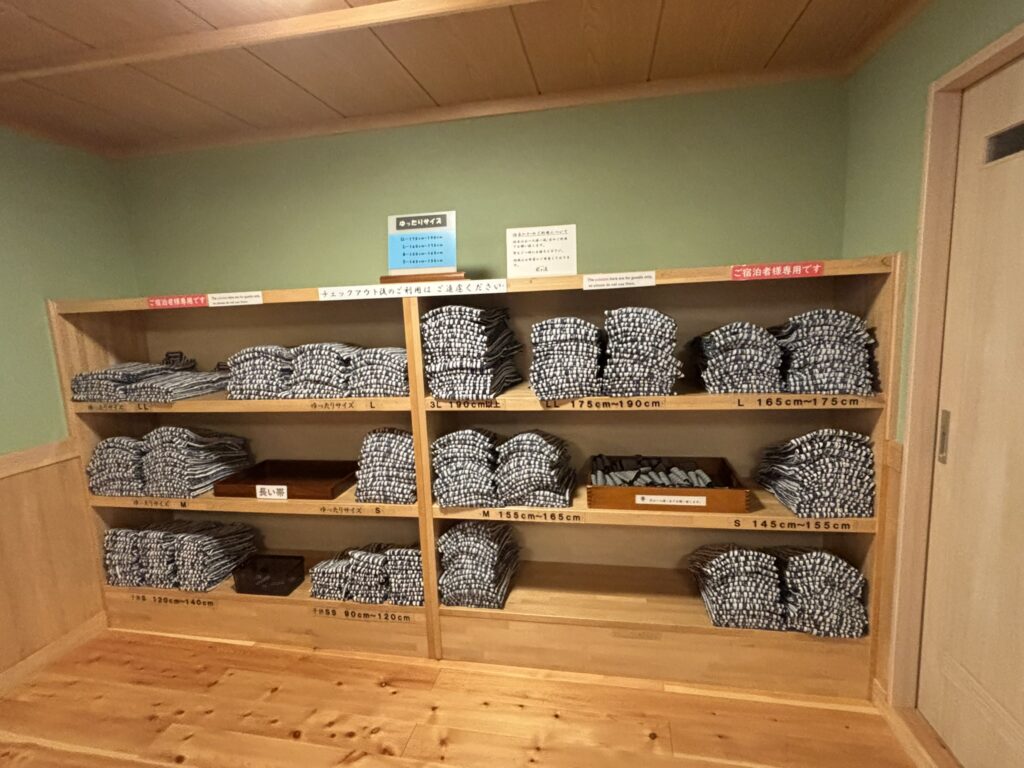
Rental Items and Other Amenities
There was an information booklet about the room amenities on the table.
However, I could not find an English version, so I will briefly summarize the information here.
This information is accurate as of November 2025.
The following items could be borrowed free of charge:
- zaisu floor chairs
- desk lamps
- kitchen knives
The following items were available for an additional fee:
- simple bed: 1,000 yen before tax per rental
- refrigerator: 1,000 yen before tax per rental
If you want to borrow any of these items, ask at the front desk or speak to the staff responsible for the guest rooms.
Toothbrushes and towels were provided in the room.
Razors were available at the front desk, so you can ask for one if needed.
A Few Things to Know
Please keep your voice down after 9:00 p.m.
Why?
Because this room was separated from the hallway by only a single fusuma sliding door.
In other words, sound carries.
A lot.
You can hear the hallway from inside the room, and people in the hallway can probably hear what is happening inside your room too.
It is therefore better to be careful about noise not only at night, but also early in the morning.
In my case, I woke up at around 5:00 a.m. to the voices of two women who were probably on their way to the bath.
Come on!!
It had already taken me a while to fall asleep in an unfamiliar room, so I was short on sleep. Being woken up like that was honestly pretty annoying.
Please pay attention to the time when talking in the hallway!
My room was also located near the toilet, and I could constantly hear the sound of running water.
I assume the water had deliberately been left running to prevent the pipes from freezing.
There was already something lonely and melancholy about the atmosphere of Sukayu Onsen, and the sound of running water suited it perfectly.
I ended up finding it rather charming.
However, if you are sensitive to sound, you may feel more comfortable bringing earplugs.
The age and facilities of the rooms vary depending on the building and room type. If this matters to you, check the official website before making your reservation.
Final Thoughts
The room where I stayed at Sukayu Onsen was neither especially soundproof nor equipped with the latest amenities.
Even so, it had a pull-cord ceiling light, a hiroen overlooking the snow, and a futon that I could lay out myself after bathing.
This was exactly the kind of room I had wanted to stay in at Sukayu Onsen.
Travelers looking for the convenience and silence of a modern hotel may find some aspects of the room surprising.
But if you want to relax in a slightly inconvenient, old-fashioned onsen inn while truly feeling that you have traveled deep into the mountains, a room like this may be perfect for you.
In the next post, I’ll introduce dinner and breakfast at Sukayu Onsen.