What Does “Shun…” Mean in Japanese Manga?
Onomatopoeia in Japanese manga can express not only sounds, but also emotions and situations.
In this series, I introduce them one by one with real examples, as a Japanese person who has loved manga for over 30 years and also holds a teaching license in Japanese language arts.
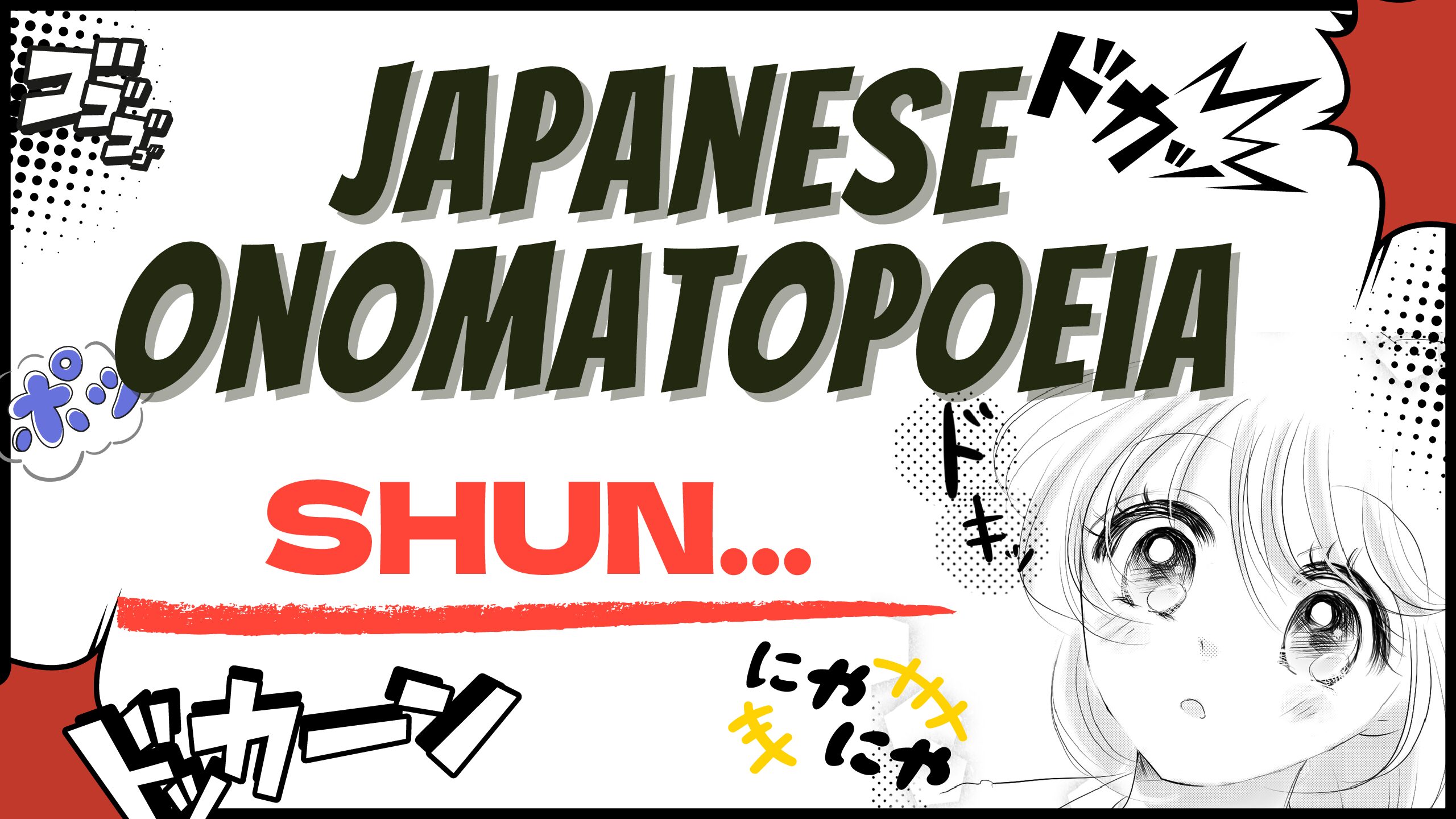
This time, it’s “shun…”
“Shun…” is a Japanese onomatopoeia used when someone becomes a little downhearted, feels sorry after being scolded, or quietly loses their energy.
However, it does not usually describe deep despair or serious grief.
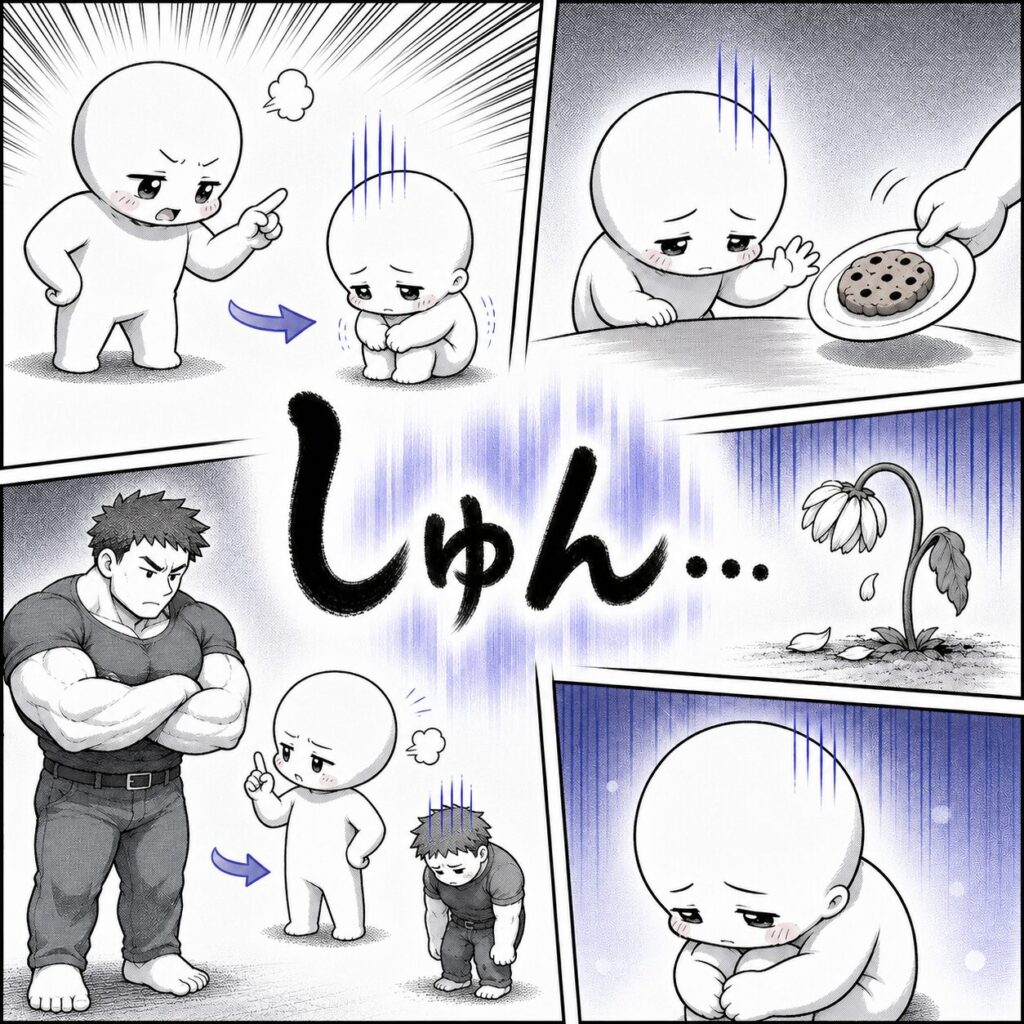
In Japanese manga, “shun…” often appears when a child becomes small after being corrected, when a character honestly reflects on their mistake, or when a big, strong-looking person suddenly becomes quietly dejected.
What makes “shun…” interesting is that it does not simply mean “sad.”
When this expression appears, the character’s feelings, attitude, and even their presence seem to become smaller. Readers may feel that the character looks a little pitiful, but also a little cute.
In this article, I’ll explain when “shun…” is used, why it expresses a soft and not-too-serious kind of dejection, and how it differs from “zuun,” “gaan,” and “shun!” as a sound effect for quick movement.
This article is for people who:
・want to understand the meaning of onomatopoeia in Japanese manga
・want to know the soft, quiet, and slightly cute nuance of “shun…”
・are interested in how Japanese onomatopoeia can express not only sounds, but also emotions and attitudes
1. The basic meaning
Shun…(しゅん・・・) is a Japanese onomatopoeia used when someone becomes a little downhearted, dejected, or quietly discouraged.
It often appears when a character admits their mistake, feels sorry, or becomes small after being scolded or gently corrected.
It is not a deep, serious sadness.
It is more like the feeling of someone’s mood and attitude shrinking.
For example:
“I want another snack.”
“You already had one.”
→ shun…
In this kind of scene, the character is not completely devastated.
They are quietly accepting the situation and becoming small.
That is the key point of shun…:
the character’s feelings, attitude, and even their presence seem to become smaller.
2. Common situations
1) When someone becomes dejected after being scolded
Shun… is often used after someone is scolded, corrected, or lightly rejected.
But the important point is that the character does not get angry or fight back.
They accept it honestly and become a little downcast.
It fits scenes such as:
- a child who ate too many snacks
- a character whose mischief was found out
- someone who made a small mistake
- someone who knows they were in the wrong
In this case, shun… does not show a serious emotional wound.
It shows the kind of sadness that makes the reader think,
“Aww, don’t look so sad.”
2) When the character is childlike or honest
Shun… works especially well for children, innocent characters, and people who are very honest with their feelings.
That is because this word has a slightly cute, harmless feeling.
The character is disappointed, but not bitter.
They are sad, but not angry.
They simply become small after being corrected.
Because of that, shun… often makes the reader feel protective toward the character.
It is a small, soft kind of sadness.
3) When a big, strong character becomes small
This is one of the best uses of shun… in manga.
For example, imagine a huge, muscular man being scolded by his wife or partner.
Even though his body is big and strong, he quietly becomes:
shun…
This creates a strong gap between appearance and personality.
He looks powerful, but inside he is surprisingly honest, gentle, or almost childlike.
In scenes like this, shun… brings out the character’s cuteness.
It makes a large presence suddenly look small.
That contrast can be very charming.
4) A sadness that is not too serious
Shun… expresses sadness or disappointment, but it is usually not used for truly serious grief.
It often has a slightly comic or light tone.
It fits situations like:
- being lightly scolded
- feeling sorry after a small mistake
- becoming disappointed when something is not allowed
- losing energy after being corrected
But it would feel too light for a scene involving serious loss, tragedy, or death.
In those situations, manga usually avoids this kind of cute or comic onomatopoeia.
So shun… is best understood as a small, soft, slightly comic kind of dejection.
5) When something seems to droop or wilt
Shun… can also feel connected to the image of something losing its energy and shrinking inward.
For example, it may fit a flower or bud that is starting to droop.
The feeling is similar to:
- a flower losing its freshness
- a bud closing or shrinking
- someone’s mood deflating
- energy quietly fading away
So shun… is not only about “being sad.”
It also has the feeling of something becoming smaller, weaker, or less lively.
This “shrinking” feeling is very important.
3. Similar expressions and differences
Shun…(しゅん・・・) vs. zuun(ずーん)
Shun… and zuun can both express feeling down, but their weight is different.
Shun… feels small, soft, and a little cute.
It suggests that someone is disappointed or discouraged, but not completely crushed.
Zuun, on the other hand, feels heavier.
It is closer to a heavy emotional weight falling onto someone.
So:
- shun… = small, quiet, slightly cute dejection
- zuun = heavier emotional sinking
If shun… makes you want to comfort the character,
zuun makes you feel the weight of their mood more strongly.
Shun…(しゅん・・・) vs. gaan(がーん)
Gaan is more about shock.
It is used when someone receives bad news, realizes something terrible, or is hit by a sudden emotional impact.
Shun…, however, is not the moment of shock itself.
It is the state after someone’s energy has gone down.
So:
- gaan = the shock
- shun… = becoming quietly dejected afterward
For example, if a character is told something surprising, they may go:
gaan!
But after being gently scolded or corrected, they may become:
shun…
Shun…(しゅん・・・) vs. shonbori(しょんぼり)
Shonbori is a more general word for looking downhearted or discouraged.
It can describe someone who has lost energy and looks sad.
Shun… is more manga-like and more moment-based.
It often shows the exact moment when someone’s mood becomes small after being scolded or corrected.
So:
- shonbori = looking generally downhearted
- shun… = suddenly becoming small and dejected in a manga-like way
Both are related, but shun… feels more visual and immediate.
4. Nuance and effect in manga
The most important feature of shun… is that the character’s energy seems to shrink.
When shun… appears in manga, the reader may feel:
- this character knows they did something wrong
- they are not trying to argue
- they are honest
- they look a little pitiful
- they are kind of cute
- the scene is not too serious
The dots in shun… are also important.
They create a pause and a lingering silence.
Instead of a quick reaction, the character seems to slowly lose energy and become smaller.
That is why shun… often feels softer than a simple word like “sad.”
It does not just say, “This character is sad.”
It shows a character quietly shrinking after being scolded, corrected, disappointed, or gently rejected.
That is what makes shun… such a useful manga expression.
Side note: “shun…” and “shun!” are different
There is another kind of shun used as a sound effect for fast movement.
For example, shun! or shunっ can describe something moving quickly through the air, like:
- something passing by very fast
- a small object cutting through the air
- a fast insect flying past
- a character suddenly moving
- a warp or teleport-like movement in a battle scene
This is different from emotional shun….
There is also shu! or shut!, which can be used for sharp movements such as a punch cutting through the air.
So it is better to separate them:
- shun… = someone’s mood shrinks
- shun! / shunっ = something moves quickly
This article focuses on shun… as an emotional expression.
Q1. Why does “shun…” mean someone looks sad if it is not really a sound?
“Shun…” is not really a sound that someone makes.
It describes the way a character’s energy seems to shrink after being scolded, corrected, or disappointed.
For example, when a child asks for another snack and is told, “You already had one,” they might quietly become shun…
The important point is that the character is not in deep despair.
They are more like small, quiet, and a little dejected.
So shun… is less about an actual sound, and more about the visual feeling of someone’s mood and presence becoming smaller.
Q2. Can people actually say “shun…” in real life, or is it mostly a manga expression?
As a standalone word, “shun…” feels very manga-like.
People do not usually say “shun…” out loud in normal conversation.
If someone said it seriously, it would sound a little theatrical, or like they were imitating a manga character.
However, the expression “shun to shite iru” can sometimes be used to describe someone who looks dejected or quietly discouraged.
For example:
“You look kind of shun today. What happened?”
Even then, it is not the most everyday casual expression.
It feels a little descriptive, almost like something you might see in narration or written Japanese.
So in manga, “shun…” works very naturally as a visual expression.
In real conversation, it is better to understand it as something people may use to describe someone’s state, rather than something they usually say as a sound.
Q3. Why is “shun…” often written with dots?
The dots make the feeling linger.
Without the dots, “shun” would feel like a shorter reaction.
But “shun…” makes it look as if the character’s energy is slowly fading away.
The dots create a small pause, a little silence, and a sense that the character has become quieter and smaller.
In manga, this makes the character look more pitiful, more harmless, and sometimes more cute.
Q4. Is “shun…” the same as “shun!” for fast movement?
No. It is better to think of them as separate expressions.
“Shun…” shows a dejected emotional state.
It is used when someone’s mood shrinks after being scolded, disappointed, or gently corrected.
On the other hand, “shun!” or “shunっ” can be used as a sound effect for something moving quickly through the air.
For example, it can suggest:
- something passing by very fast
- the sound of cutting through the air
- quick movement
- a warp or sudden movement in battle scenes
So:
- shun…(しゅん・・・) = someone’s mood shrinks
- shun! / shun(しゅんっ) = something moves quickly
They may look similar in roman letters, but in Japanese manga, the dots and the small っ change the meaning a lot.