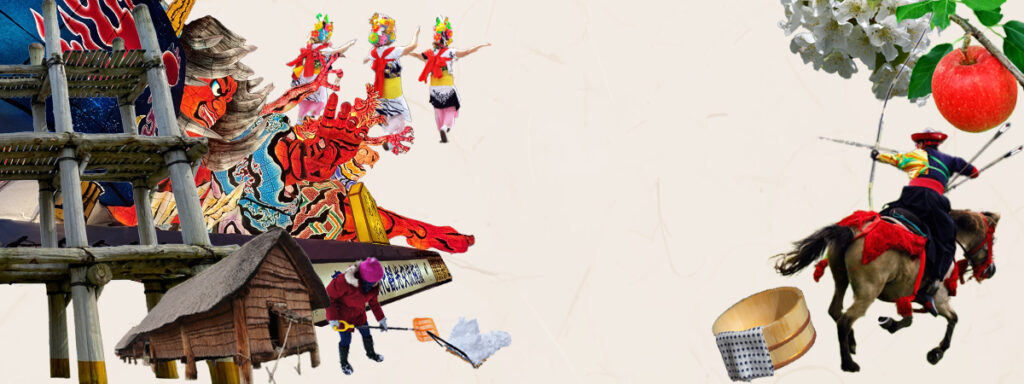
Aomori’s Culture
What is Aomori’s Culture?
If I had to describe it in one phrase,
it would be: “How people live with winter.”
Aomori’s long winters shaped its crafts, festivals, and ways of speaking.
Each region—Tsugaru, Nanbu, and Shimokita—developed its own style of living, enduring, and enjoying the snow.
I hope this page helps you discover the many layers of Aomori’s culture—quiet, warm, and deeply creative.
Crafts
Aomori’s crafts were born from winter.
Tsugaru lacquerware, Kogin embroidery, and Nanbu Saki-ori are all expressions of patience, ingenuity, and making the most of limited materials.
These quiet, beautiful traditions show how people turned daily life into art.
Language & Expression
Aomori has three cultural regions—Tsugaru, Nanbu, and Shimokita—
each with its own dialect, rhythm, and way of expressing emotions.
Even within one prefecture, you can hear completely different “Aomori” depending on where you go.
Festivals & Traditions
After the long winter, Aomori’s festivals come alive with color and emotion.
Nebuta, Enburi, the Hachinohe Sansha Festival, and Tsugaru shamisen—
each region celebrates in its own powerful way.
Winter’s quiet and summer’s energy live side by side in Aomori’s traditions.
Hot Springs
Aomori’s hot springs are a part of everyday life, not just a way to warm up in winter.
Farmers and fishermen often bath after finishing their early-morning work—
a rhythm made possible in a prefecture known for being the earliest to rise in Japan.
Whether for healing, warming up, or simply starting the day,
hot springs are a daily tradition woven into Aomori’s lifestyle.